How to Choose and Hang Curtains: Width, Height and Length
Curtains hung a little too low and a little too narrow make windows look smaller and rooms feel cramped. A few measurements, done in the right order, fix most of that before you buy a metre of fabric.
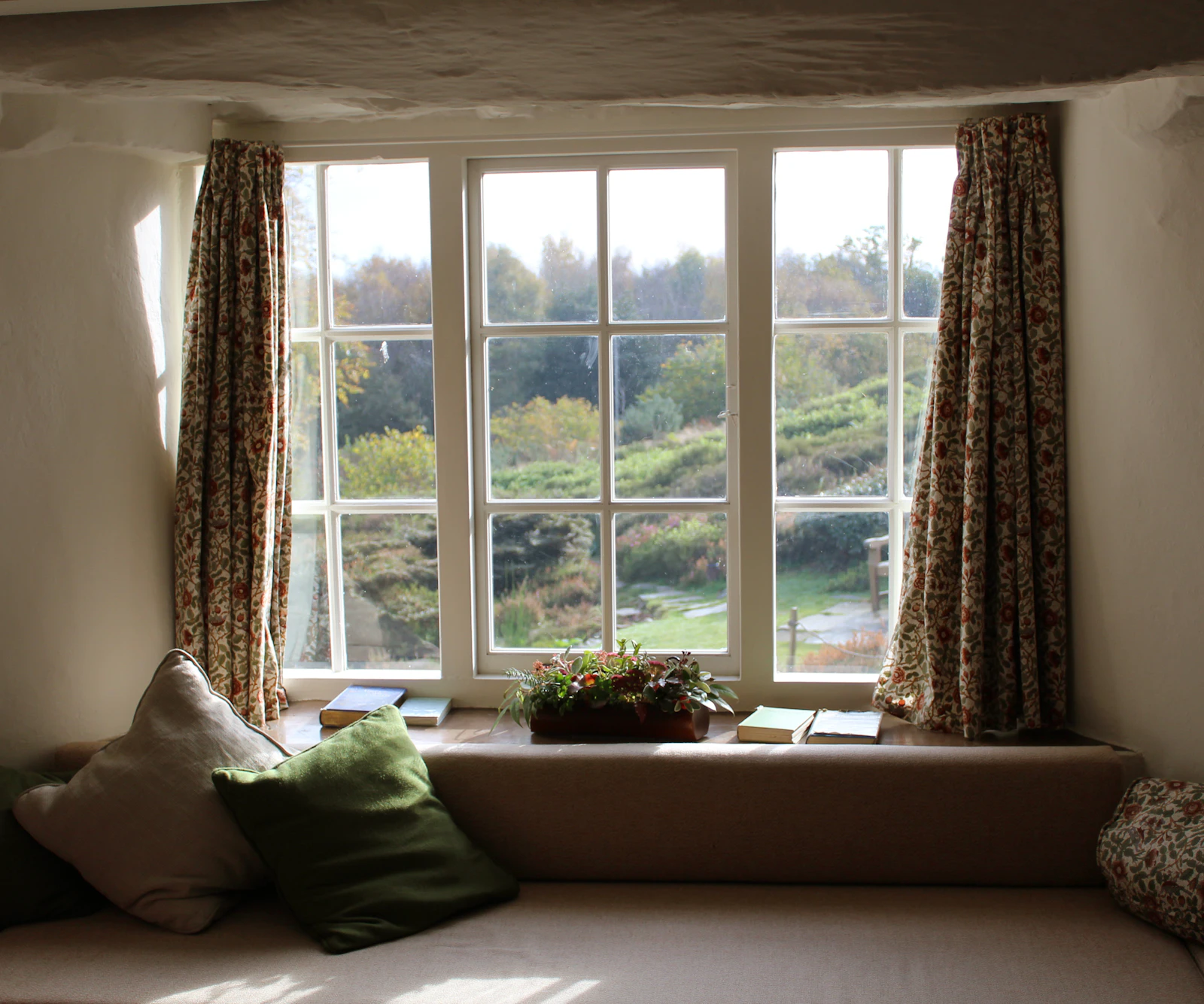
Curtains do more work than almost any other soft furnishing. They control light and privacy, reduce draughts, soften echoes and frame the view. They also change the apparent proportions of a room: well-hung curtains can make windows look wider and ceilings look higher, while poorly placed ones do the opposite. Most problems come down to three measurements, width, height and length, followed by the choice of heading and lining.
This guide works through each decision in the order you should make it, with the numbers you need. When you are ready to calculate fabric, the curtain calculator does the arithmetic.
Step 1: Decide what the curtains need to do
Before choosing fabric, be clear about the job. Different priorities lead to different headings, linings and fixings.
- Light control: blackout lining for bedrooms and media rooms; unlined or sheer fabric where you want daylight.
- Privacy: sheers or voiles during the day, heavier curtains at night, often layered on a double track or pole.
- Warmth: thermal or interlined curtains reduce heat loss through glass and draughts around frames.
- Sound: heavier, fuller fabrics absorb more sound and soften hard rooms.
- Decoration only: dress curtains that never close can use less fabric and sit permanently either side of the window.
Step 2: Set the width of the pole or track
Extend the pole or track 15–25 cm (6–10 in) beyond the window frame on each side. Curtains need somewhere to "stack back" when open. Without that extra width, open curtains sit over the glass and block a surprising amount of daylight. A wider pole also makes the window itself look broader.
Heavier, fuller curtains need a deeper stack. Interlined curtains on a large window can take up 25–35 cm (10–14 in) or more per side when open, so allow extra if wall space permits. If the window is close to a corner or adjoining wall, a track that bends or a pole with a recess bracket can help.
For spans longer than about 1.5–2 m (5–6½ ft), most poles need a central support bracket to prevent sagging. Standard rings cannot pass a central bracket, so choose passing rings or a track designed for the purpose if the curtains need to close fully.
Step 3: Set the height
A traditional starting point is to mount the pole or track 10–15 cm (4–6 in) above the top of the window frame. This clears the frame, gives the fixings solid wall to grip and lets the heading sit above the glass rather than in front of it.
To make ceilings look higher, mount the fixings higher, approaching the ceiling. A few rules keep this looking intentional:
- Leave about 2–5 cm (1–2 in) between the top of the curtain or finial and the ceiling or cornice, so nothing looks squeezed.
- Keep all windows in the same room at the same pole height where possible, even if the windows themselves differ.
- Check what is above the window. Lintels can be hard to drill; plasterboard needs suitable fixings. If in doubt, use a detector to check for cables and pipes before drilling.
Hanging curtains high and wide is one of the most effective techniques in our guide to making a room look bigger.
Step 4: Choose a length
Measure the drop from the point where the curtain will hang to where you want it to finish. Where you measure from depends on the heading: the bottom of the ring eye on a pole with rings, the top of the pole for eyelet curtains, or the underside of the track for tracks.
| Length | Where it finishes | Look | Best for |
|---|---|---|---|
| Float | About 1 cm (under ½ in) above the floor | Crisp, tailored | Most living rooms and bedrooms; easy to clean around |
| Kiss | Just touching the floor | Precise, elegant | Formal rooms; needs accurate measuring and level floors |
| Break | 2–5 cm (1–2 in) on the floor | Relaxed, slightly soft | Uneven floors, linen fabrics that may drop or shrink |
| Puddle | 5–15 cm (2–6 in) on the floor | Romantic, luxurious | Rarely opened dress curtains in low-traffic rooms |
| Sill | About 1 cm above the sill | Neat, cottage style | Windows with deep sills, window seats or furniture beneath |
| Apron | 10–15 cm (4–6 in) below the sill | Practical | Windows above radiators, where full-length curtains would trap heat |
Floor-length curtains generally look more generous and make a room feel taller. Avoid curtains that end in an awkward position, a few centimetres below the sill but far above the floor, which look like a measurement error.
Measure the drop at several points across the window. Floors and ceilings are rarely perfectly level, and a difference of 1–2 cm is enough to show on a floating length.
Step 5: Choose a heading and calculate fullness
The heading is how the top of the curtain is constructed, and it determines how much fabric you need. Fullness is the ratio of fabric width to pole or track width. Too little fullness makes curtains look thin and flat even when closed.
| Heading | Typical fullness | Character | Notes |
|---|---|---|---|
| Pencil pleat | 2–2.5× | Versatile, gathered | Adjustable tape; works on poles and tracks |
| Pinch pleat (double or triple) | 2–2.5× | Tailored, classic | Holds formal folds; made to measure or ready-made |
| Eyelet | 1.5–2× | Modern, deep regular folds | Pole only; slides easily; leave room above the pole for the fabric |
| Wave | About 2–2.5× | Contemporary, even S-shaped folds | Needs a compatible track and carriers |
| Tab top or tie top | 1.5–2× | Informal | Do not slide well; best for dress curtains |
| Rod pocket | 2–3× | Gathered, soft | Static; ideal for sheers and café curtains |
Worked example: a window 140 cm (55 in) wide with a pole extended 20 cm each side gives a pole width of 180 cm (71 in). For pencil pleats at 2.25× fullness, you need about 405 cm (159 in) of finished curtain width, split across a pair, so roughly 203 cm per curtain. If your fabric is 140 cm wide, each curtain needs about one and a half widths, so you would buy three widths in total, plus allowances for hems and pattern matching.
Pattern repeats
Patterned fabrics must be matched across seams and between the pair. Add one pattern repeat to each cut length (a "drop") so the motifs line up horizontally. On large repeats, this can add significantly to the fabric quantity.
Step 6: Choose lining
- Unlined: light and airy; lets light glow through. Fades faster in sun.
- Standard lining: cotton or poly-cotton. Protects the face fabric, improves drape and gives a uniform look from outside.
- Blackout lining: a coated or dense lining that blocks most light through the fabric. Light still escapes at the edges, so overlap curtains at the centre and extend poles generously.
- Thermal lining: designed to reduce heat transfer and draughts.
- Interlining: a soft, blanket-like layer between face fabric and lining. It gives full, luxurious folds and the best insulation and sound absorption, but adds weight and bulk at the stack.
Step 7: Choose fabric
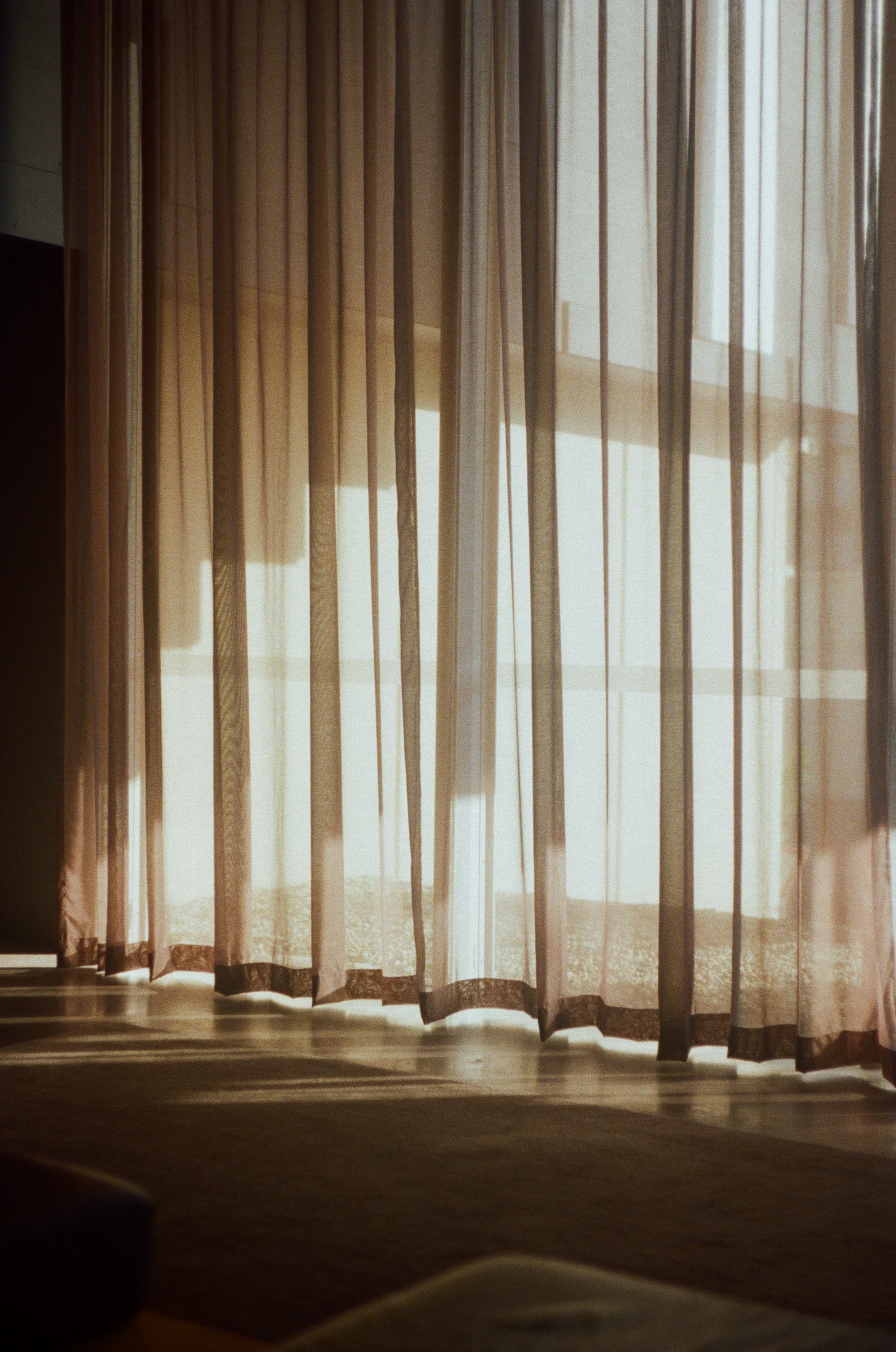
Fabric weight affects how curtains fall. Mid-weight fabrics in linen, cotton, wool blends and velvet drape well; very light fabrics need generous fullness to look substantial. Natural linen can shrink slightly and "drop" in length with humidity, so a break length or a hem that can be adjusted is useful. In sunny windows, any fabric will fade over time; lining helps. For more on how fibres behave, see the natural materials guide.
How to measure, step by step
- Fit the pole or track first if you can. Measuring from installed hardware is far more accurate than measuring from the window and estimating.
- Measure the width of the pole between the finials, or the full length of the track. This is the figure you multiply by fullness.
- Measure the drop from the correct point for your heading (ring eye, top of pole or underside of track) to the finishing point, at the left, centre and right of the window.
- Use the shortest drop for floating or kissing lengths, so no part drags on the floor. Add a little for break or puddle lengths.
- Note obstacles: radiators, sockets, window handles that project, deep sills and furniture beneath the window.
- Use a steel tape, not a fabric one, which can stretch, and record every figure in centimetres.
Bay windows, wide openings and other awkward windows
- Bay windows: a bendable track or a jointed bay pole follows the shape of the bay. Allow for the curtains to stack at the ends of the bay or at each angle, and check that the corners have enough support brackets.
- Very wide windows and sliding doors: curtains that open from the centre need a generous stack area on each side. A track with an overlap arm at the centre gives a better seal for blackout curtains.
- Windows close to a ceiling: a ceiling-mounted track lets curtains start right at the ceiling, which maximises height and blocks more light at the top.
- Dormer and skylight windows: curtains are rarely practical; blinds designed for the window type work better.
- Windows that open inwards: make sure curtains and poles clear the sash when it swings open, which may mean using deeper brackets.
Fixings and wall types
Curtains, especially lined or interlined pairs, are heavy, and every opening and closing pulls on the brackets. Solid masonry needs masonry drill bits and wall plugs matched to the screw size. Plasterboard needs fixings designed for hollow walls, or better, screws into the timber studs or a timber batten fixed across them. Concrete lintels above windows are very hard and may require a hammer drill and patience. Always check for hidden cables and pipes before drilling, and if the wall is unusual or you are unsure what is behind it, ask a qualified tradesperson.
Care and cleaning
Vacuum curtains gently with an upholstery brush every few weeks to remove dust, paying attention to the top folds. Check the care label before washing: many lined and interlined curtains need professional dry cleaning, because the face fabric and lining can shrink by different amounts. Unlined cotton and linen sheers can often be machine washed on a gentle cycle and rehung slightly damp so they drop straight.
Common mistakes
- Pole the same width as the window. Open curtains then cover the glass and block light.
- Mounting directly on top of the frame. It makes the window and ceiling look lower.
- Too little fullness. Flat curtains look cheap even in good fabric.
- Awkward in-between lengths that stop neither at the sill nor near the floor.
- Measuring from the wrong point. Rings, eyelets and tracks all hang differently.
- Skipping the centre bracket on long poles, leading to sagging.
- Floor-length curtains over radiators, which trap heat behind the fabric.
- Forgetting pattern repeats and running short of fabric.
Curtain checklist
- Decide the job: light, privacy, warmth, sound or decoration.
- Set pole or track width: window frame plus 15–25 cm each side (more for heavy curtains).
- Set height: at least 10–15 cm above the frame, or near the ceiling for extra height.
- Choose a length and measure the drop from the correct point at several places.
- Choose a heading and multiply width by its fullness ratio.
- Add hem, seam and pattern-repeat allowances.
- Choose lining to suit light and warmth needs.
- Check walls before drilling and use fixings suitable for the wall type.
Done in this order, curtains stop being an afterthought and start doing what good window treatments should: making the window look its best, open or closed.
Frequently asked questions
How far should a curtain pole extend beyond the window?
Allow roughly 15–25 cm (6–10 in) beyond the window frame on each side. That gives the curtains somewhere to stack when open, so they do not cover the glass and block light, and it makes the window look wider.
How high above the window should I hang curtains?
A common starting point is 10–15 cm (4–6 in) above the top of the window frame. To make a room feel taller, mount the pole or track closer to the ceiling, leaving a few centimetres below the ceiling or cornice so the fittings do not look squeezed.
How much fabric do I need for full-looking curtains?
Multiply the pole or track width by the fullness ratio for your heading: about 2 to 2.5 times for pencil pleats and wave headings, and around 1.5 to 2 times for eyelets. Then add allowances for side hems, seams and pattern repeats.
Should curtains touch the floor?
For a tailored look, curtains should hang about 1 cm (under ½ in) above the floor or just touch it. Puddled curtains, with 5–15 cm extra fabric on the floor, look relaxed and romantic but collect dust and are impractical in busy rooms.
Are blackout curtains worth it for bedrooms?
Blackout linings block most light through the fabric and can help in bedrooms, especially in summer or near street lights. Light still escapes at the edges and top, so a wider pole, curtains that overlap at the centre and a pelmet or ceiling-mounted track help make them more effective.
Measurements and rules of thumb in this guide are starting points; always check your own room, local building rules and manufacturer instructions. Images are illustrative, from Unsplash. Read how we research and update our guides in our Editorial Policy, and tell us if you spot an error.