How to Create a Timeless Living Room
A timeless living room does not follow the latest look. It is built on good proportions, honest materials and a layout that supports real life. Here is how to create one that still feels right in ten years.
Every few years, a new look sweeps through living rooms: a colour everyone suddenly paints, a sofa shape that appears in every magazine, a pattern that feels fresh for a season and then quietly disappears. Following those waves is exhausting and expensive. A timeless living room takes a different path. It is designed around proportion, comfort, light and materials that improve with age, so it can evolve with you instead of needing a full makeover every time taste shifts.
Timeless does not mean boring or old-fashioned. The most enduring rooms often feel quite contemporary. What they share is a sense of calm and coherence: nothing shouts, everything has a reason to be there, and the room feels comfortable to live in. In this guide we explain the principles designers use to create that feeling and how you can apply them in your own home.
What “timeless” really means in interior design
A timeless interior is one that does not strongly signal the year it was designed. You could walk into it today or a decade from now and it would still feel appropriate and inviting. That quality usually comes from three things working together:
- Structure: a sensible layout, good proportions and furniture scaled correctly to the room.
- Materials: natural, durable finishes such as wood, stone, linen, wool, leather and ceramic that develop character over time.
- Restraint: a considered palette and a limited number of pieces, each chosen for quality, comfort or meaning.
Trends are not the enemy. They can bring energy and freshness. The key is to keep them in the layers that are easy and inexpensive to change, such as cushions, a vase or a print, rather than in the architecture or the large furniture.
Start with the layout and how you live
Before thinking about colours or furniture styles, think about how the room is used. Is it a place for conversation, for watching films, for reading, for children to play, or all of these? A living room that supports daily life will always feel better than one designed only to look good in a photograph.
Define a clear focal point
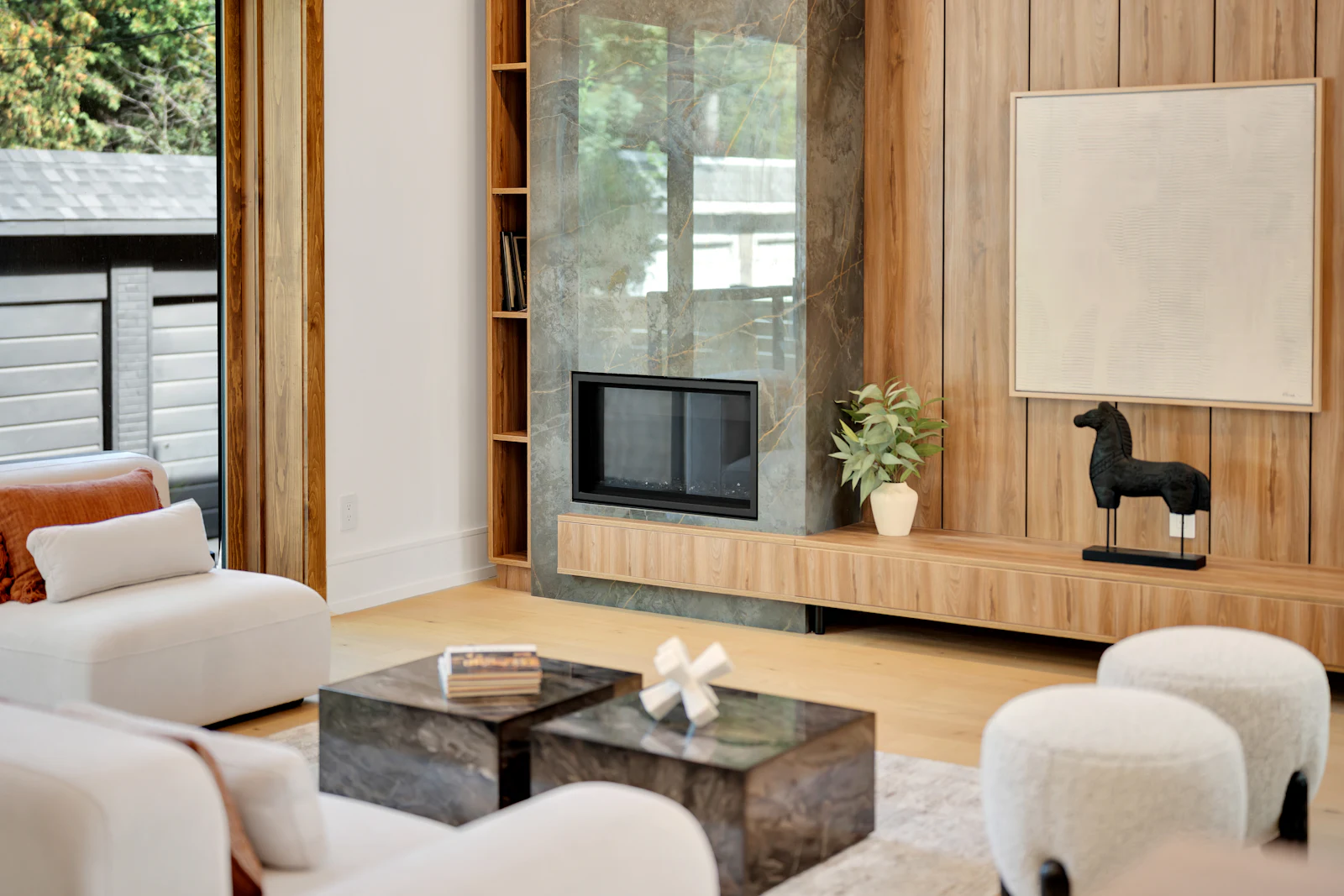
Most living rooms have a natural focal point: a fireplace, a large window with a view, a built-in bookcase or a wall suited to art. Arrange the main seating to face or frame it. If the room has no obvious feature, you can create one with a substantial piece of art, a well-designed media wall or a statement shelving unit.
Create a conversation area
Seating should be close enough for people to talk comfortably without raising their voices, generally within about 2.5 to 3 metres of each other. Floating furniture away from the walls, even slightly, often creates a more intimate and balanced arrangement than pushing every piece to the edges.
Respect circulation
Leave clear walkways of around 80 to 90 centimetres through the room, and about 40 to 45 centimetres between the sofa and the coffee table so you can reach a cup without stretching. Good circulation is invisible when it works and frustrating when it does not. If your room is compact, our guide to small space design ideas explains how to plan around tight dimensions.
Choose a palette that will not date
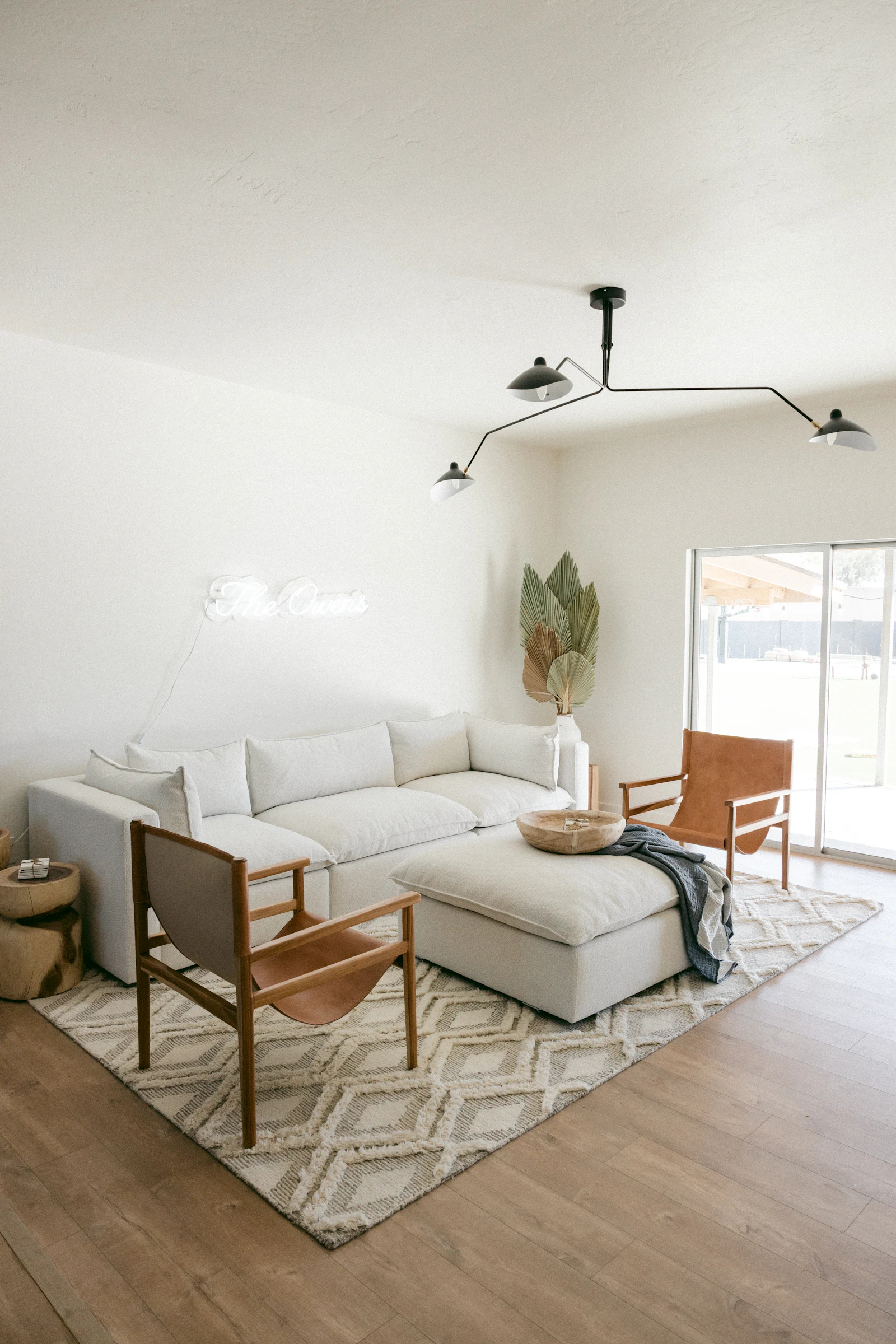
Colour is where many rooms age fastest. Strong, fashionable shades on large surfaces can feel tired within a few years. A timeless palette usually starts with a calm, warm base and adds depth through tone and texture rather than through many competing colours.
Build on warm neutrals
Ivory, soft white, stone, sand and warm greige are excellent foundations. They reflect light, suit most architectural styles and make it easy to change accessories. Look for neutrals with a subtle warm undertone; very cool greys and stark bright whites can feel clinical, especially in rooms with limited natural light.
Add colours from nature
Colours that exist in the landscape rarely go out of style. Olive and sage greens, earthy browns, deep navy, terracotta and ochre work beautifully as accents against a neutral base. Use them in a rug, an armchair, curtains or a painted piece of furniture. For a step-by-step method, read our guide on how to choose the perfect colour palette for your home.
Use the 60-30-10 principle as a guide
A simple way to keep a palette balanced is to use a dominant colour for around 60 per cent of the room (walls and large surfaces), a secondary colour for about 30 per cent (major furniture, curtains, rug) and an accent for the remaining 10 per cent (cushions, art, objects). It is a guideline rather than a rule, but it prevents a room from feeling either flat or chaotic.
Invest in the right pieces
A timeless living room is not necessarily an expensive one, but it does reward smart investment. Spend more on the items you touch and use every day, and save on things that are easy to replace.
The sofa
The sofa is the anchor of the room and deserves the biggest share of the budget. Look for a solid hardwood frame, a comfortable seat depth for the way you sit, and high-quality cushioning. Classic silhouettes with clean lines, such as a simple track-arm or softly rounded shape, have a longer life than highly stylised designs. Choose a fabric in a durable weave and a colour that works with a changing palette.
The rug
A good rug defines the seating area and softens the acoustics of the room. Size matters: ideally, at least the front legs of all main seating should sit on it. Natural fibres like wool and jute age gracefully, and a subtle texture or tonal pattern hides everyday wear better than a flat, pale surface.
Tables and storage
Coffee tables, side tables and sideboards in solid wood, stone or metal can last for generations. Mixing materials, for example a timber sideboard with a stone coffee table, gives the room depth and avoids the showroom look of a matching set.
Designer tip
Resist buying a complete living room set in one go. Rooms that evolve over time, with pieces from different sources and periods, almost always feel more personal and more timeless than a coordinated package.
Let natural materials do the work
Materials are the quiet heroes of timeless design. Natural finishes change subtly as they age: wood deepens in tone, leather softens, linen relaxes, stone gains a gentle patina. That change makes a room feel lived-in and authentic rather than worn out.
- Wood brings warmth to floors, furniture and shelving. Oak, walnut and ash are enduring choices.
- Linen and cotton are ideal for curtains, cushions and slipcovers, offering a relaxed texture.
- Wool adds softness and warmth in rugs, throws and upholstery.
- Stone and ceramic introduce weight and coolness, balancing softer materials.
- Rattan, cane and jute give an organic touch, especially in lighter, relaxed interiors.
Combining several textures within a restrained palette is what keeps a minimal room from feeling cold. We explore this in more detail in our article on minimalist home decor with warmth.
Layer your lighting
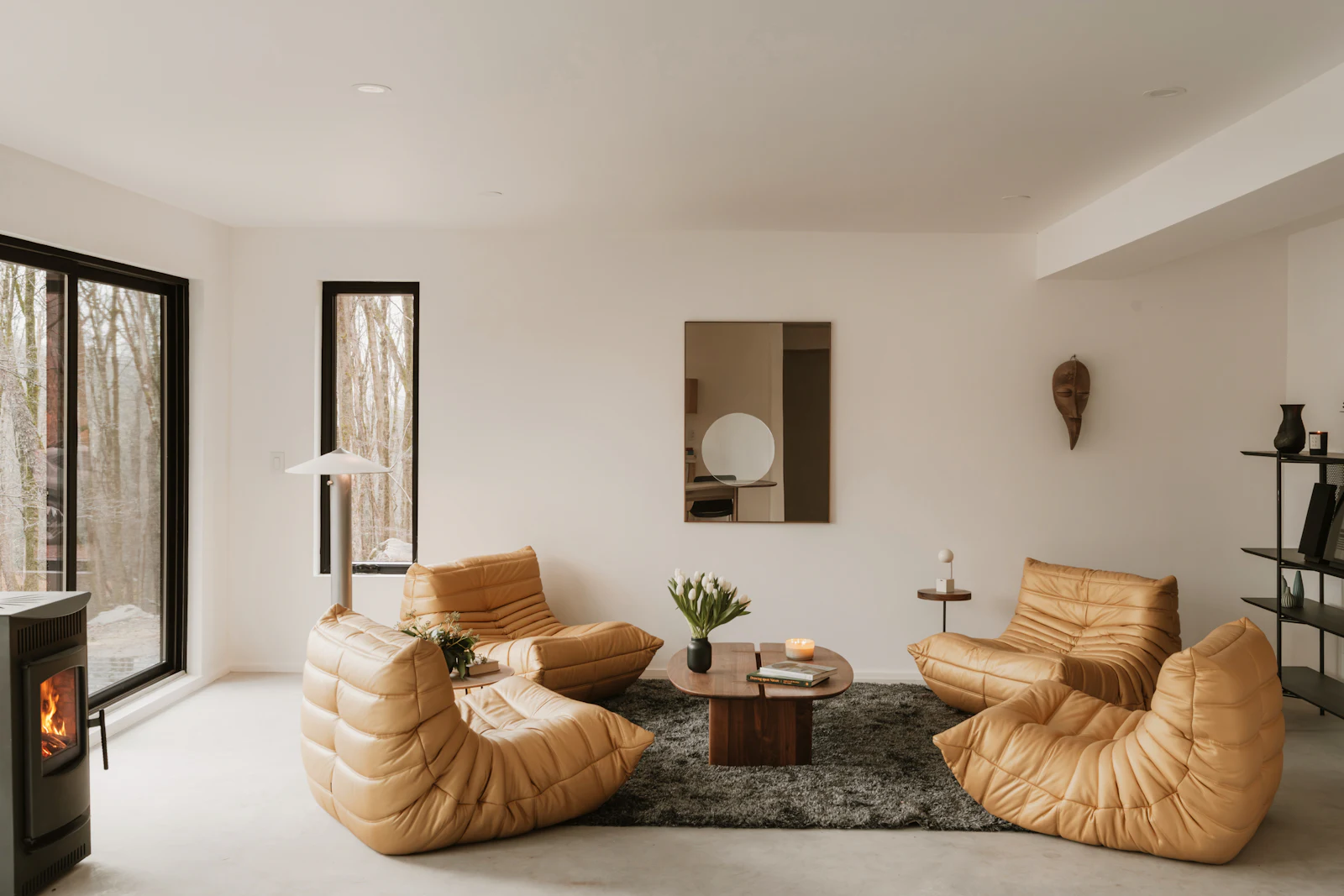
Lighting has an enormous influence on how a living room feels, yet it is often an afterthought. A single ceiling light creates flat, uninviting illumination. Timeless rooms use several layers that can be adjusted throughout the day.
Ambient light
This is the general illumination of the room, from ceiling fixtures, recessed lights or wall washers. Fit dimmers wherever possible so you can soften the light in the evening.
Task light
Reading corners, desks and side tables need focused light. A well-placed floor lamp beside an armchair or a table lamp next to the sofa makes the room genuinely usable.
Accent light
Picture lights, shelf lighting or a small lamp on a console add depth and atmosphere, drawing attention to art, textures or architectural features. Warm white bulbs, around 2700 kelvin, create the most comfortable evening glow in living spaces.
Bring in character with meaningful objects
What truly makes a room timeless is that it feels personal. Books you have read, art you love, ceramics from a trip, a chair inherited from a relative: these objects give the room a story that no trend can replicate.
Curate rather than collect
Display fewer objects, but give each one space. Group items in odd numbers, vary their heights and leave some empty surface around them. Rotate pieces seasonally so the room stays fresh without buying more.
Choose art slowly
Art is one of the most personal elements of a room. Rather than filling walls quickly with generic prints, take time to find pieces that genuinely mean something to you. A single larger artwork often has more impact than many small frames.
Add life with plants
Plants and fresh branches soften architecture and connect the room to nature. A large, sculptural plant in a simple pot works as a living piece of decor and suits almost any style.
Where to follow trends (and where not to)
If you enjoy trends, you do not need to avoid them. Simply place them strategically. Use this simple hierarchy:
- Keep classic: architecture, flooring, built-in joinery and large upholstered furniture.
- Choose carefully: rugs, curtains, lighting and occasional chairs. These last several years but can be replaced.
- Have fun: cushions, throws, vases, candles, books and small prints. These are ideal places to try a new colour or pattern.
This approach lets your room feel current without locking you into a look you might tire of. Our guide to interior design trends and how to adapt them goes deeper into this strategy.
A simple checklist for a timeless living room
- The layout supports how you actually use the room, with a clear focal point and comfortable circulation.
- The palette is built on warm neutrals with accents inspired by nature.
- The sofa and other key pieces are well made, comfortable and classic in shape.
- Natural materials and varied textures add warmth and depth.
- Lighting is layered, dimmable and warm.
- Objects and art are personal, edited and given room to breathe.
- Trends live in the easy-to-change layers, not in the foundations.
Designing a timeless living room is less about finding the perfect style and more about making thoughtful choices that respect the space and the people who live in it. Start with the structure, invest where it counts, and let the room grow with you. For the practical next steps, see our guides to arranging living room furniture and choosing the right rug size.
Frequently asked questions
What makes a living room timeless?
A timeless living room combines good proportions, a flexible layout, a restrained colour palette and natural, durable materials. It relies on quality and comfort rather than on short-lived trends, so it can evolve gradually without needing a full redesign.
Which colours are best for a timeless living room?
Warm neutrals such as ivory, stone, sand and greige are the most versatile base colours. They pair well with nature-inspired accents like olive green, deep blue, terracotta or warm brown. Choose a base you would be happy to live with for many years and add stronger colour in accessories.
Is a grey sofa still a timeless choice?
A sofa in a soft, warm neutral is generally more enduring than a strongly coloured one. Cool, flat greys can feel dated, while warmer tones with texture, such as oatmeal linen or stone-coloured wool, tend to age better and are easier to combine with other colours.
How do I make an old living room look timeless without replacing everything?
Start by editing: remove clutter and pieces you no longer love. Then improve the layout, add layered lighting, introduce natural textiles and replace one or two dated items, such as the rug or curtains. Small, well-chosen changes can transform a room without a full renovation.
How much should I spend on a sofa for a timeless living room?
Allocate a larger share of your budget to the pieces you use daily, especially the sofa. Look for a solid hardwood frame, good cushioning and removable or durable covers. A well-made sofa can last many years and can often be reupholstered instead of replaced.
Measurements and rules of thumb in this guide are starting points; always check your own room, local building rules and manufacturer instructions. Images are illustrative, from Unsplash. Read how we research and update our guides in our Editorial Policy, and tell us if you spot an error.