How to Design a Calm Bedroom
A calm bedroom is less about a particular style than about removing the things that keep the mind busy: visual clutter, glare, noise and stray light. Here is how to address each one, from paint to curtains to the position of the bed.
Calm is a quality people recognise instantly but rarely define. In a bedroom it usually comes down to a handful of things the room does not do: it does not glare, it does not echo, it does not let streetlight in at five in the morning, and it does not present a pile of unfinished tasks every time you lie down. Designing for calm is mostly about removing these irritants, then adding comfort in layers.
This guide works through the room in the order that has the biggest effect: what you see, what you hear, the light at different times of day, and how the furniture is arranged.
Start by reducing visual noise
Visual clutter keeps the eye moving. A bedroom with clothes on a chair, cables trailing from the bedside table and open shelves crammed with objects will struggle to feel calm, whatever the paint colour.
Give everything a closed home
Closed storage is the single most effective tool. Wardrobes with solid doors, chests of drawers and under-bed drawers hide the everyday items that would otherwise sit in view. A useful target is to have enough closed storage that the only things left out are those you actually want to look at.
- Wardrobe: allow at least 60 cm (24 in) internal depth for hanging clothes on standard hangers, and keep 90 cm (36 in) clear in front of hinged doors to open them and stand.
- Bedside tables: a drawer or a closed cupboard hides chargers, medicines and books in progress.
- Under-bed storage: drawers or lidded boxes for seasonal bedding and clothes.
- A laundry basket with a lid: it removes the most common source of bedroom clutter.
Edit the surfaces
Aim for a small number of objects on each surface: a lamp, a book and one personal item on a bedside table is plenty. Group decorative items in one place, such as the top of a chest of drawers, instead of scattering them around the room. Manage cables by routing them behind furniture and using a charging spot in a drawer.
Choose colours that rest the eye
There is no single "calm colour", but restful bedrooms tend to share three traits: low saturation (greyed or softened colours rather than pure ones), low contrast between walls, textiles and furniture, and a limited palette of two or three main colours.
| Palette | Mood | Pairs well with |
|---|---|---|
| Sage and soft green | Fresh, grounded, natural | Oak, linen, cream, terracotta accents |
| Greyed blue | Cool, airy, quiet | White oak, warm white, navy textiles |
| Warm white and stone | Light, gentle, open | Natural wood, wool, rattan, ochre |
| Clay, mushroom and taupe | Warm, enveloping | Walnut, cream bedding, brass |
| Deep muted tones (forest, ink) | Cocooning, dramatic | Pale bedding, warm lamps, wood |
Dark colours can be very calming in a bedroom because the room is used mainly at night. A deep, muted green or blue on all walls, sometimes carried onto the ceiling, blurs the edges of the room and feels enclosing. What tends to disturb calm is high contrast: a bright white ceiling over a dark wall, or strongly patterned wallpaper behind the bed, which is the first thing you see on waking.
Test colours with large painted samples, at least A3 size, on two walls, and look at them in the morning and under evening lamps. For a deeper explanation of building a palette, see our guide to choosing a colour palette, and use the paint calculator to estimate quantities.
Control daylight and darkness
Blackout that actually blacks out
Many bedrooms have blackout curtains that still let light in, because the light leaks around the edges rather than through the fabric. To reduce this:
- Extend the pole or track 15–25 cm (6–10 in) beyond each side of the window frame, so the curtains overlap the wall.
- Mount the pole close to the ceiling or at least 15 cm above the frame, to block light from above.
- Let curtains touch or just kiss the floor.
- Choose a blackout lining or an interlining; thermal blackout linings also help with draughts.
- For the darkest result, combine a blind fitted inside the window recess with curtains outside it.
Use the curtain calculator to work out widths with enough fullness to overlap at the centre.
Morning light
Many people like daylight on waking. Sheer curtains or a light-filtering blind behind blackout curtains give you the choice: draw back the heavy layer and let soft light in while keeping privacy.

Light the room for evening
Bright overhead light at night is one of the least restful things in a bedroom. A calm bedroom relies on low, warm light sources at or below eye level when lying or sitting.
- Colour temperature: warm white of 2200–2700 K for lamps used in the evening. These bulbs contain a lower proportion of blue light than cool white bulbs and give a relaxed, amber glow.
- Dimmers: dimmable lamps or a dimmer on the ceiling circuit let you lower the light gradually. A qualified electrician should fit wired dimmers and check bulb compatibility.
- Bedside lights: shaded lamps or wall lights that direct light down onto a book rather than into the eyes of a partner.
- Night lights: a low-level light on a motion sensor near the floor makes night-time trips safer without waking you fully.
Our bedroom lighting guide covers lamp heights and lumen levels in detail.
Soften the sound
A bedroom with hard floors, bare walls and minimal furniture can echo, making every sound sharper. Soft materials absorb sound and make a room feel quieter:
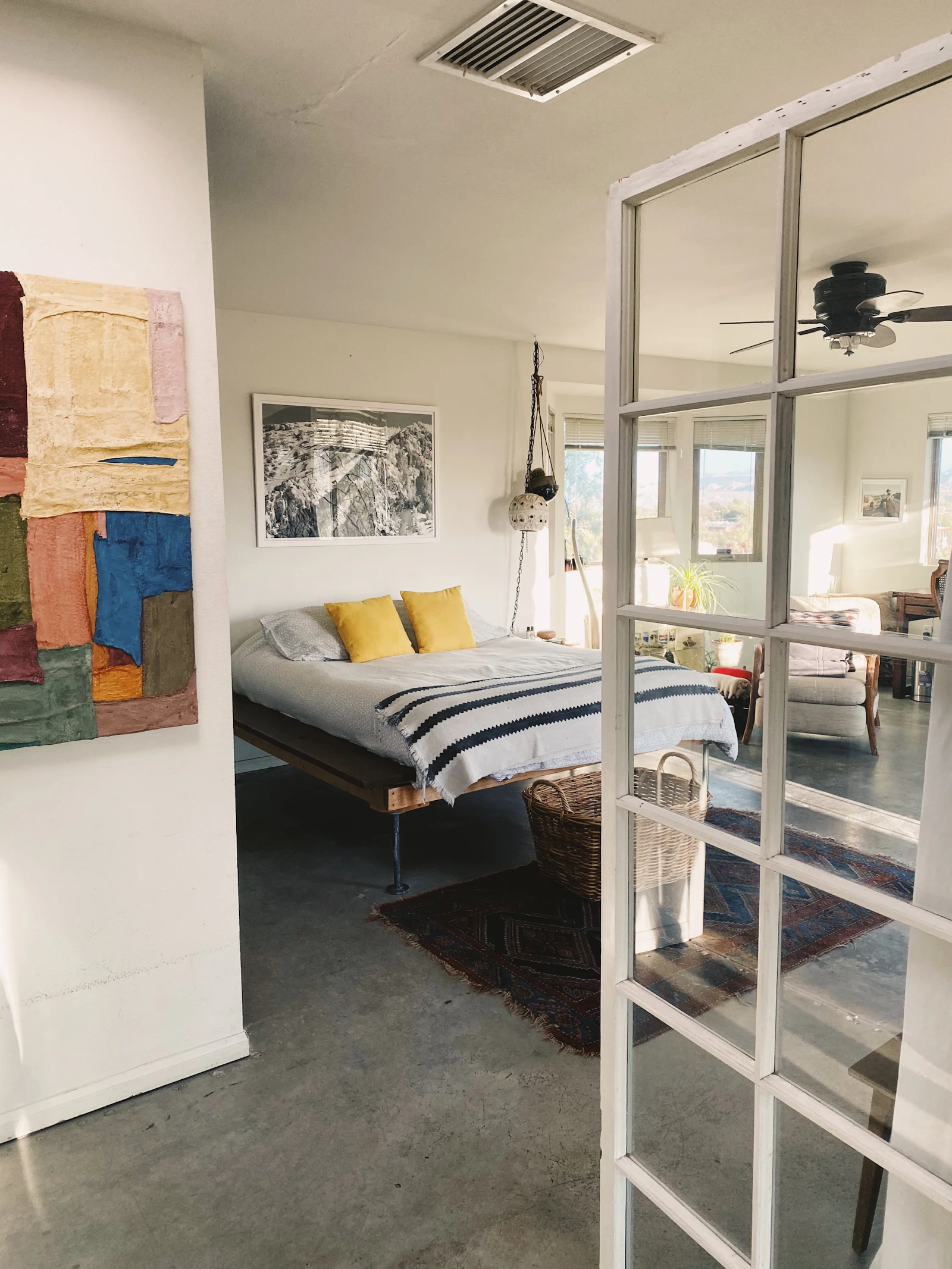
- A large rug under the bed, extending 45–60 cm (18–24 in) beyond the sides.
- Lined, full-length curtains with generous fullness.
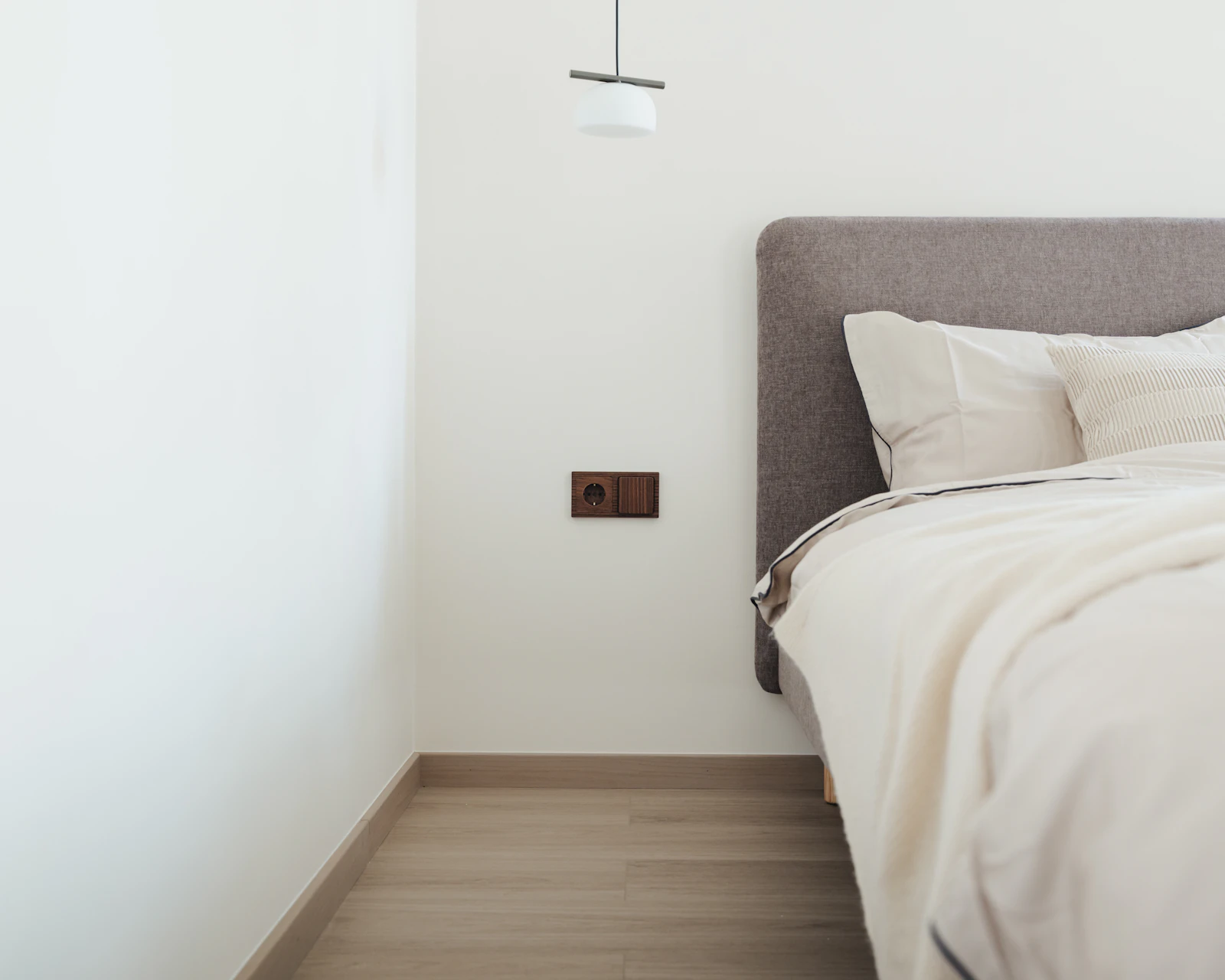
- An upholstered or padded headboard.
- A fabric-covered bench, armchair or ottoman.
- Books on shelves, which break up reflections.
Absorbing echo inside the room is different from blocking noise from outside. For noise from the street or other rooms, gaps are usually the weak point: a door seal and a draught strip around a sash or casement can make a noticeable difference. Secondary glazing or wall insulation are bigger projects that may need professional advice.
Choose textiles for touch and temperature
Calm is physical as well as visual. Bedding that feels pleasant and helps regulate temperature contributes as much as the paint colour. Breathable natural fibres such as cotton percale and linen tend to feel cool and dry; flannel and brushed cotton feel warm in winter. Layering, with a lighter duvet plus a blanket or throw, lets you adjust without changing everything. Sleep organisations often cite a cool bedroom, roughly 16–19 °C (61–66 °F), as comfortable for most people, so plan bedding for a cool room rather than heating the room to suit heavy bedding. Our guide to choosing bedding fabrics explains weaves, weights and duvet togs.
Keep the bed visually simple. Two or three textures, for example linen sheets, a wool blanket and a cotton cushion, in closely related colours look more restful than a pile of contrasting cushions.
Use texture and natural materials
A restrained palette can feel flat or clinical if every surface is smooth. Texture adds warmth without adding visual noise, because it reads as variation within a single colour rather than as competing colours. Wood grain, a slubby linen, a chunky wool throw, a woven basket or a matt plaster finish all give the eye something gentle to rest on.
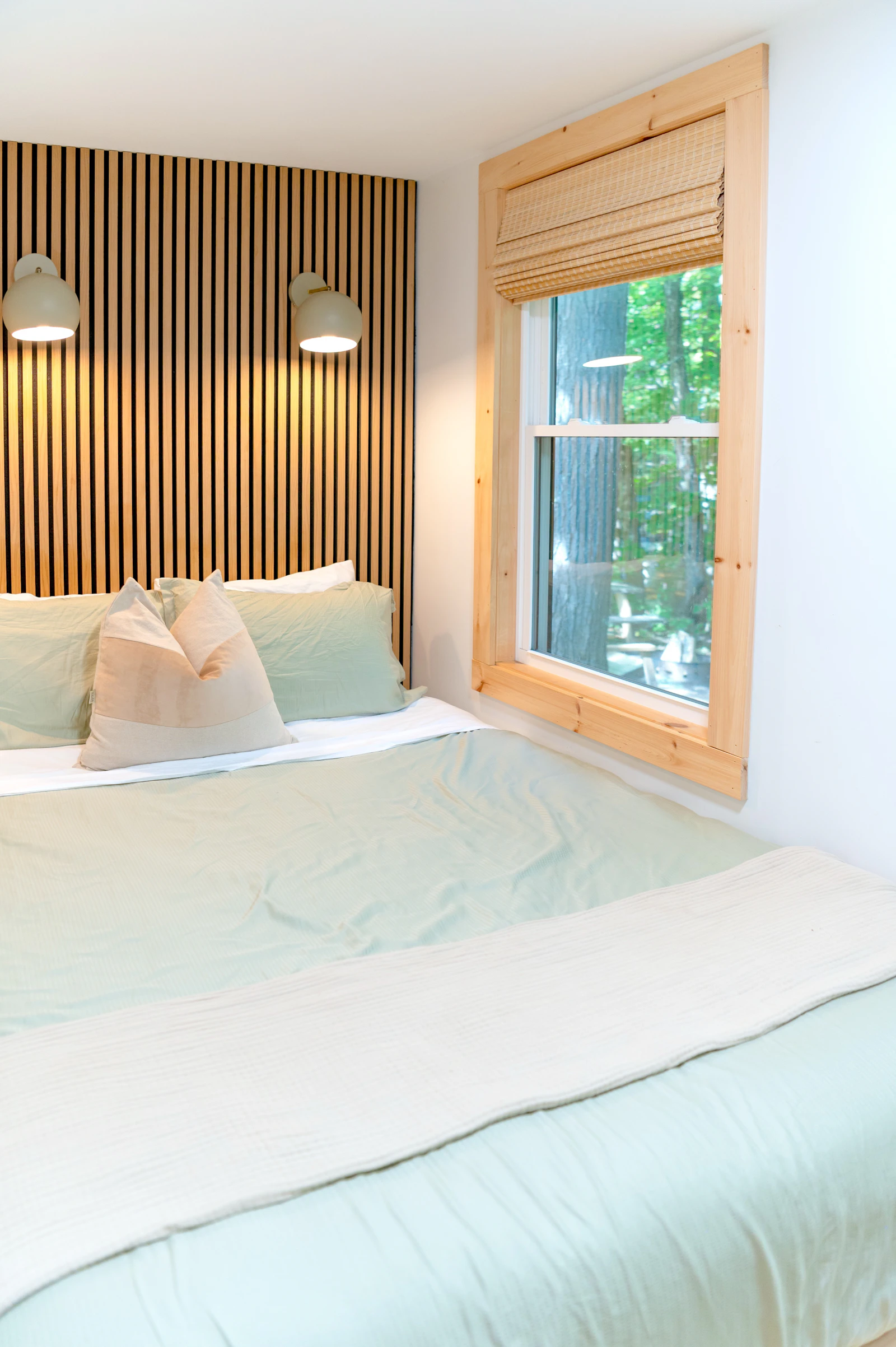
Natural materials also age gently. Oiled oak, linen and wool develop a patina rather than looking worn, which helps the room keep its relaxed character over time. A slatted timber wall or headboard, as in the photographs in this article, is a good example: it adds rhythm and warmth while staying quiet in colour. If you add plants, choose a few that suit the light level of the room rather than many small pots, which can become clutter.
Design the bed wall carefully
The wall behind the bed is the one you see when you walk in, and the wall opposite is the one you see when you lie down. Treat them differently. The bed wall can carry the room's strongest element: a deeper paint colour, timber panelling, a tall upholstered headboard or a single large piece of art hung 15–25 cm above the headboard. The wall facing the bed should be the quietest in the room, free of busy shelves, a television or a large mirror that reflects light from the window or the landing.
Symmetry also helps. Matching bedside tables and lamps on either side of the bed create a sense of order with almost no effort, even if the rest of the room is more relaxed.
Arrange the room for rest
Layout affects how settled you feel in a room. A few principles help:
- See the door from the bed. Many people feel more at ease when they can see the entrance without being directly in line with it.
- Give the bed a solid wall. A headboard against a wall feels more secure than one under a window, and it avoids draughts and light at head height.
- Leave clear space on both sides. Aim for 60–75 cm (24–30 in) on each side of a double bed so both sleepers can get in and out without climbing.
- Keep work out of sight. If a desk must be in the bedroom, place it where it is not visible from the bed and close it off at night.
- Avoid facing a mirror or a screen directly. Reflections and standby lights catch the eye at night.
For layouts by room size and bed size, see bedroom layout ideas.
Common mistakes
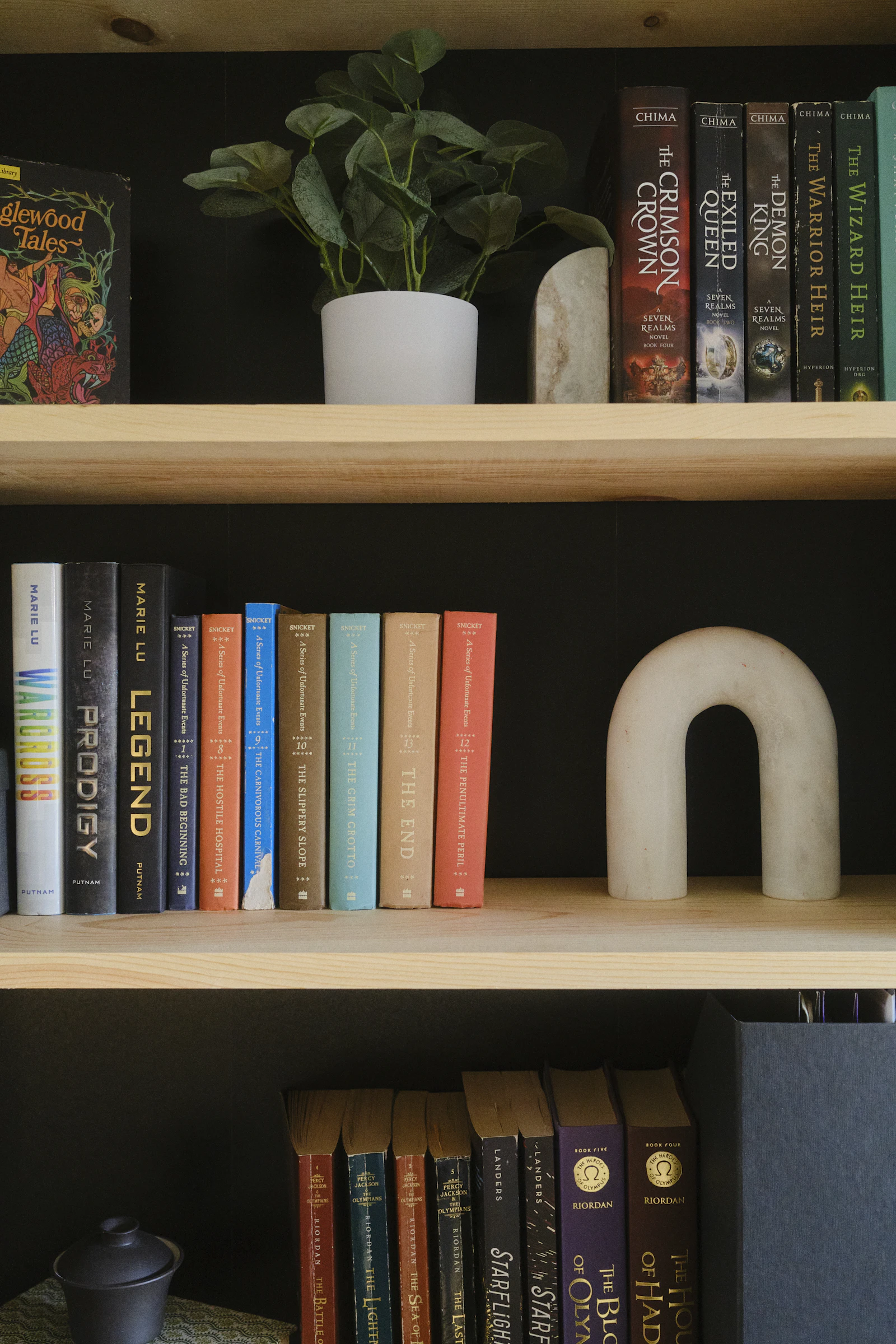
- Open shelving full of objects. It looks lovely in photographs and busy in real life. Keep it sparse or close it off.
- Cool, bright overhead lighting. A single ceiling light at 4000 K is better suited to a kitchen.
- Blackout curtains on a pole that is too short. Light leaks around the sides.
- A feature wallpaper behind the bed that you can see from it. Consider using strong pattern on the wall behind the headboard only if the view from the bed is calm.
- Too many cushions. If you have to move a pile every night, the bed is creating work.
- Treating the bedroom as overflow storage. Exercise equipment, laundry and paperwork undo every other decision.
Calm bedroom checklist
- Closed storage for clothes, chargers and everyday items; surfaces edited.
- A low-contrast palette of two or three muted colours, tested in morning and evening light.
- Blackout curtains extended 15–25 cm beyond the window and mounted high.
- Warm 2200–2700 K lamps with dimming; no glare from the bed.
- Soft surfaces: rug, curtains, upholstered headboard.
- Breathable bedding in layers for a cool room.
- Bed on a solid wall with a view of the door and 60–75 cm on each side.
- Screens and work out of sight.
None of these steps depends on a particular style. A calm bedroom can be minimal, traditional or rich in colour; what it needs is consistency, comfort and fewer things asking for attention.
Frequently asked questions
What colours make a bedroom feel calm?
Muted, low-saturation colours tend to feel most restful: soft greens such as sage, greyed blues, warm off-whites, stone, clay and mushroom tones. The key is low contrast and low intensity rather than a specific hue. A deeper, muted colour can feel cocooning, while very bright or highly saturated colours tend to feel energising.
How can I make my bedroom darker at night?
Use curtains with a blackout lining and extend the pole 15–25 cm beyond each side of the window so light cannot leak around the edges. Hang them close to the ceiling and let them touch the floor. Combining a blind fitted inside the window recess with curtains outside it blocks the most light.
What colour temperature is best for bedroom lighting?
Warm light of around 2200–2700 K suits bedrooms in the evening. It has a lower proportion of blue light than cooler bulbs and creates a relaxed atmosphere. Dimmable lamps make it easy to lower the light level as the evening goes on.
How do I reduce noise in a bedroom?
Soft materials absorb sound: a large rug, lined curtains, an upholstered headboard and fabric-covered furniture all reduce echo. To block noise from outside the room, the most effective measures are sealing gaps around doors and windows; secondary glazing or acoustic upgrades may need professional advice.
Should I have a TV or desk in a calm bedroom?
Where space allows, keep work and screens out of the bedroom so the room is associated with rest. If a desk must be there, place it where it is not visible from the bed and close it off at night with a cupboard door, a screen or a cover.
Measurements and rules of thumb in this guide are starting points; always check your own room, local building rules and manufacturer instructions. Images are illustrative, from Unsplash. Read how we research and update our guides in our Editorial Policy, and tell us if you spot an error.